As a global leader in sports equipment manufacturing, EVERGRANDSPORT understands the critical importance of durable, safe, and high-performance basketball systems for commercial and institutional applications. In-ground basketball hoops represent the pinnacle of stability and longevity, making them the preferred choice for schools, community centers, municipal parks, and professional training facilities worldwide. This comprehensive guide is designed to equip B2B buyers—distributors, wholesalers, contractors, and procurement managers—with the knowledge necessary to make informed purchasing decisions, ensuring optimal value and performance for their projects.
Key Takeaways for In-Ground Basketball Hoops
- Superior Stability: In-ground hoops offer unmatched stability and durability for permanent installations, ideal for high-traffic areas.
- Diverse Backboard Options: Choose between tempered glass (best performance), acrylic (good balance), and polycarbonate (most durable for heavy use).
- Critical Pole Gauge: Heavier gauge steel poles (e.g., 5-6 gauge) provide superior rigidity and resistance to rust and bending.
- Adjustability is Key: Hydraulic or crank-based height adjustment mechanisms are crucial for accommodating various age groups and skill levels.
- Safety First: Prioritize systems that meet ASTM or FIBA standards, featuring sturdy construction, proper overhang, and breakaway rims.
- Installation Matters: A proper concrete foundation and professional installation are vital for the system’s longevity and safety.
- Long-Term Investment: While initial costs may be higher, in-ground systems offer unparalleled lifespan and minimal maintenance, reducing total cost of ownership.
What Are In-Ground Basketball Hoops?
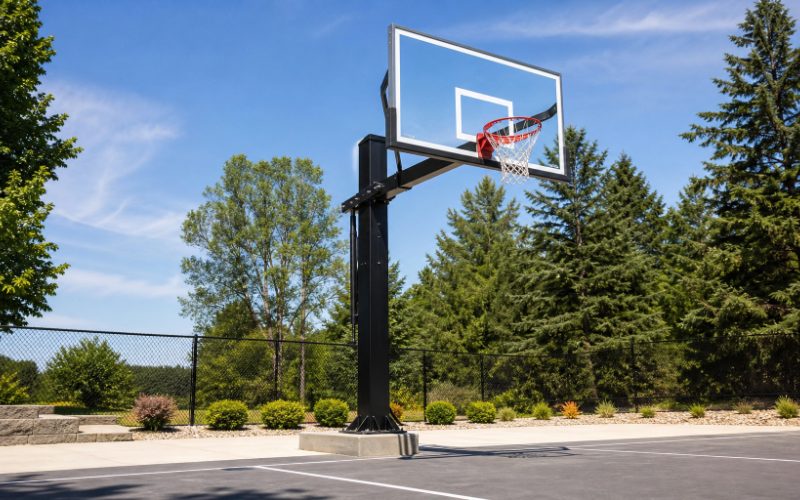
In-ground basketball hoops are permanent basketball systems designed for stability, durability, and a professional playing experience. Unlike portable systems that rely on a weighted base, in-ground hoops feature a sturdy pole anchored directly into the ground, typically set in a concrete foundation. This robust installation method provides exceptional rigidity, allowing for minimal sway during play and ensuring a longer lifespan, even under heavy use and diverse weather conditions. They are the standard choice for regulation courts and any facility prioritizing safety and long-term performance.
Why Choose In-Ground Hoops Over Portable Systems for Commercial Use?
For schools, municipalities, and sports facilities, the decision between in-ground and portable basketball hoops is clear. While portable systems offer flexibility, in-ground hoops deliver performance, safety, and longevity that are essential for commercial and institutional environments.
Superior Stability and Durability
In-ground systems are engineered for permanence. Their foundation-anchored poles provide unparalleled stability, eliminating the risk of tipping or significant movement during aggressive play. This stability translates directly into enhanced durability, as the system can withstand constant use, strong winds, and impacts without degradation. This makes them ideal for high-traffic public courts where equipment undergoes daily stress.
Enhanced Safety Features
Safety is paramount in public and educational settings. In-ground hoops, by virtue of their secure installation, mitigate many safety concerns associated with portable systems. The absence of a large, heavy base means fewer tripping hazards. Furthermore, robust construction and stable backboards reduce the risk of equipment failure during intense play, protecting players and spectators alike. Many in-ground systems offer padded backboards and pole protection to further enhance safety.
Permanent Installation for Long-Term Value
While the initial installation of an in-ground system is more involved, its permanent nature offers significant long-term value. These systems require minimal repositioning or storage, freeing up staff time and resources. Their extended lifespan, often decades with proper maintenance, results in a lower total cost of ownership compared to portable units that may need more frequent replacement or repair. For facilities planning dedicated sports spaces, in-ground hoops are a strategic, one-time investment.
Key Components of an In-Ground Basketball Hoop System
Understanding the individual components of an in-ground basketball hoop is crucial for making informed purchasing decisions. Each part contributes to the system’s overall performance, safety, and durability.
Backboard Materials and Sizes
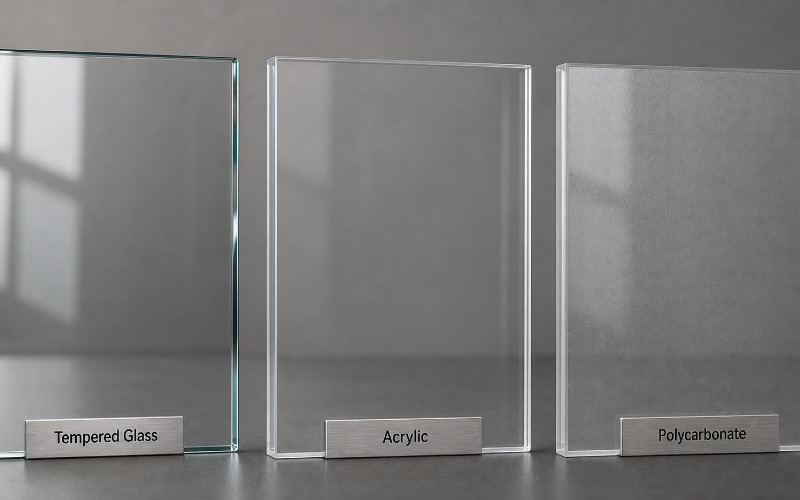
- Tempered Glass: Offers the best rebound performance, closely mimicking professional arena systems. It’s highly rigid and provides excellent ball response. Ideal for high-level play, competitive environments, and facilities seeking premium quality. Available in 1/2″ or 3/8″ thickness.
- Acrylic: A more budget-friendly alternative to glass, acrylic provides good rebound characteristics and is significantly lighter and more shatter-resistant than glass. It’s a popular choice for schools and community centers where a balance of performance and durability is needed. Thickness usually ranges from 1/2″ to 5/8″.
- Polycarbonate: The most durable and impact-resistant option, polycarbonate backboards are virtually unbreakable. While rebound performance is not as crisp as glass or acrylic, their extreme resilience makes them perfect for unsupervised public parks, playgrounds, and elementary schools where vandalism or heavy abuse is a concern.
Common Backboard Sizes:
- 72 inches (183 cm) wide x 42 inches (107 cm) high: Regulation size, suitable for professional, collegiate, and high school courts.
- 60 inches (152 cm) wide x 36 inches (91 cm) high: Popular for schools, community centers, and recreational play, offering a good balance of size and cost.
- 54 inches (137 cm) wide x 33 inches (84 cm) high: More compact, often chosen for residential or smaller recreational areas.
Rim Types and Features
- Standard (Static) Rims: Fixed and rigid, suitable for casual play or where dunking is prohibited. Less common in commercial settings due to potential for damage.
- Breakaway Rims: Essential for commercial and institutional hoops. These rims feature a spring-loaded mechanism that allows them to flex downwards under force (e.g., dunking), then snap back into place. This prevents damage to the backboard and pole, and most importantly, reduces stress on players’ hands and wrists. Single-spring, double-spring, and multi-directional breakaway options are available, with double-spring offering superior performance and durability for frequent dunking.
Pole Construction and Gauge
The pole is the backbone of the system. It should be constructed from heavy-gauge steel for maximum rigidity and resistance to weathering. Square poles (typically 4×4, 5×5, 6×6 inches) are generally preferred over round poles for their superior torsional rigidity and ease of mounting the extension arm.
- Gauge: Lower gauge numbers indicate thicker steel. For commercial use, poles should ideally be 7-gauge or lower (e.g., 6-gauge, 5-gauge) for optimal stability and longevity, especially for systems with significant overhang.
- Finish: Look for poles with a powder-coated finish for superior rust and corrosion resistance, essential for outdoor installations. Galvanized steel offers even greater protection.
Extension Arm and Overhang
The extension arm connects the backboard to the main pole, determining the ‘overhang’ – the distance between the pole and the front of the backboard. A larger overhang (e.g., 3-5 feet) increases player safety by keeping the pole further from the playing area, reducing the risk of collisions. This is particularly important for competitive play and in areas with younger users. Adjustable overhangs offer versatility but are less common for fixed in-ground systems.
Anchor System
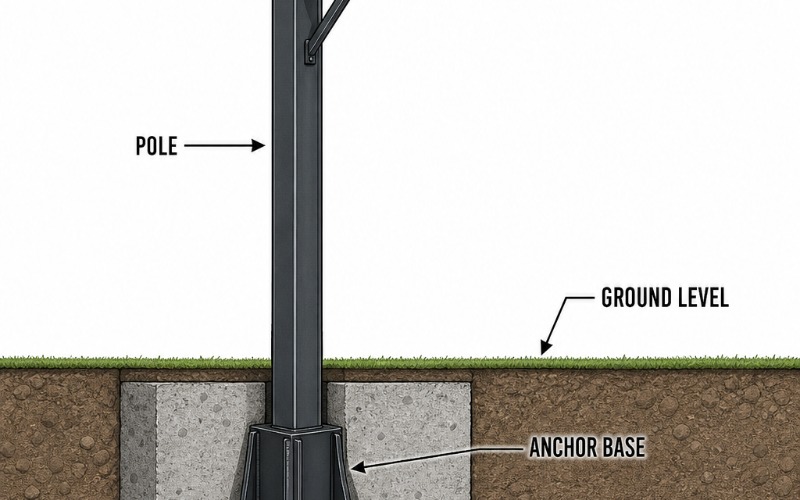
- Anchor Kit (J-Bolt/Ground Sleeve): This is the most common and versatile system for in-ground hoops. An anchor kit, typically comprising a series of J-bolts embedded in a concrete slab, is installed first. The pole then bolts onto this anchor plate. This method allows for precise leveling and, in rare cases, removal or relocation of the pole without disturbing the entire concrete foundation. It also allows for easier replacement of the system if ever needed.
- Direct Bury: In this method, the pole is directly cemented into the ground. While simpler in installation, it offers less flexibility for leveling adjustments post-pour and makes future removal or replacement significantly more challenging. For commercial installations, the anchor kit system is almost always preferred due to its adjustability and longevity benefits.
Essential Factors for Selecting the Right In-Ground Basketball Hoop
Choosing the optimal in-ground system requires careful consideration of several key factors relevant to commercial and institutional procurement.
Intended Use and User Demographics
Define the primary users and the level of play. Are the hoops for elementary school children, high school athletes, adult recreation leagues, or professional training? This will dictate the required durability, backboard material, rim type, and desired adjustability range.
- Youth/Elementary: Highly durable polycarbonate backboards, easily adjustable heights, maximum safety overhang.
- High School/Community: Tempered glass or acrylic backboards (60-72 inch), heavy-duty breakaway rims, 5-6 gauge pole, 3-4 ft overhang.
- Collegiate/Professional: Regulation 72-inch tempered glass, competition-grade breakaway rim, 4-5 ft overhang, ultra-heavy gauge pole (5-gauge or lower).
Durability and Weather Resistance
Outdoor installations demand materials and finishes that can withstand harsh weather conditions, including UV exposure, rain, snow, and extreme temperatures. Look for:
- Powder-Coated Steel: Provides excellent protection against rust and chipping.
- Hot-Dip Galvanized Steel: Offers superior corrosion resistance, ideal for coastal areas or regions with high humidity.
- Stainless Steel Hardware: Prevents rusting of bolts, nuts, and other fasteners.
- UV-Resistant Backboards: Prevents yellowing or degradation of acrylic and polycarbonate over time.
Adjustable Height Mechanisms
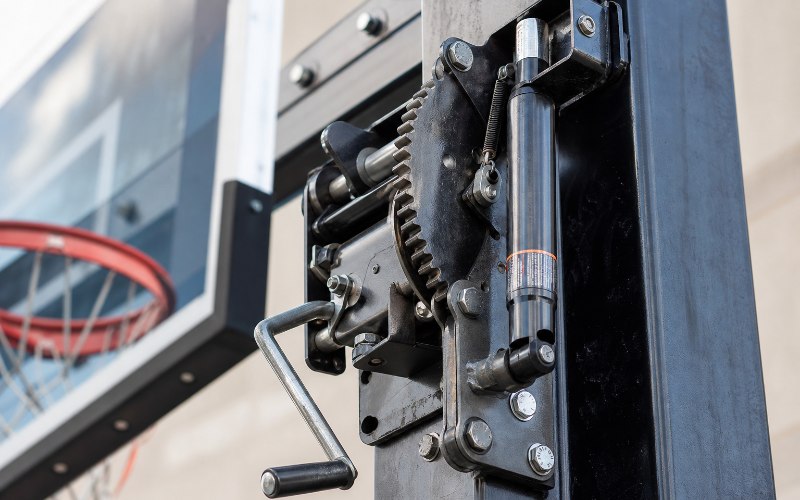
Adjustability is a crucial feature for accommodating various age groups and skill levels. Most commercial in-ground systems offer easy height adjustment from 7.5 feet to the regulation 10 feet. Common mechanisms include:
- Crank Handle System: Smooth and reliable, typically uses a worm gear mechanism for easy one-person adjustment.
- Screw Jack System: Robust and precise, offering fine height tuning.
- Hydraulic System: Often found on premium models, providing effortless, fluid adjustments with minimal effort.
Safety Standards and Certifications
Ensure that the chosen system complies with relevant safety standards. In the US, ASTM (American Society for Testing and Materials) standards are important. For international projects, FIBA (International Basketball Federation) certification may be required for competitive play. These standards address design, material strength, stability, and player safety, giving buyers confidence in the product’s integrity.
Budget and Long-Term Investment
While in-ground hoops generally have a higher upfront cost than portable systems, their durability and longevity translate into a superior long-term investment. Consider the total cost of ownership, including purchase price, installation, maintenance, and projected lifespan. Investing in a high-quality system from a reputable manufacturer like EVERGRANDSPORT minimizes future repair and replacement costs.
Customization and Branding Options
For schools, clubs, or municipalities, the ability to customize backboards with logos or specific color schemes can enhance facility aesthetics and brand identity. EVERGRANDSPORT offers customization services to meet specific project requirements, from branded backboards to custom powder coating colors.
In-Ground Basketball Hoop Installation: Crucial Considerations
Proper installation is as critical as the quality of the hoop itself to ensure safety, stability, and longevity. Ignoring installation best practices can compromise the entire system.
Site Selection and Court Compatibility
Select a level, stable surface free from overhead obstructions (e.g., power lines, tree branches). Ensure adequate space around the playing area, especially behind the baseline, for player safety and optimal gameplay. For new court constructions, plan the hoop placement in conjunction with court dimensions and drainage systems.
Concrete Foundation Requirements
An in-ground hoop requires a substantial concrete foundation to anchor the pole securely. The size and depth of the concrete pad will depend on the specific hoop model, soil conditions, and local climate (e.g., frost line considerations). Always follow the manufacturer’s precise specifications for concrete volume, depth, and curing time. This typically involves digging a hole, placing the anchor system, pouring concrete, and allowing several days for full curing before mounting the pole and backboard.
Professional Installation Services
For commercial and institutional projects, professional installation is highly recommended. Experienced installers ensure that the anchor system is perfectly level, the concrete cures correctly, and all components are assembled according to specifications. This guarantees the system’s structural integrity, safety, and compliance with warranties.
Maintenance for Longevity
Once installed, minimal but consistent maintenance will extend the life of your in-ground hoop. This includes:
- Regular inspection of hardware (bolts, nuts) for tightness.
- Checking the pole and backboard for signs of rust, cracks, or damage.
- Cleaning the backboard periodically with a mild detergent.
- Lubricating height adjustment mechanisms if applicable.
- Promptly addressing any signs of wear or damage to prevent escalation.
Technical Comparison: Backboard Materials
| Feature | Tempered Glass | Acrylic | Polycarbonate |
|---|---|---|---|
| Rebound Performance | Excellent (True & Crisp) | Good (Lively) | Fair (Dampened) |
| Durability/Impact Resistance | High (Can shatter if stressed at edges) | Good (Shatter-resistant) | Excellent (Virtually Unbreakable) |
| Scratch Resistance | Excellent | Good | Fair (Can scratch) |
| UV Resistance | Excellent (No yellowing) | Good (Can yellow over time without coating) | Good (Can yellow over time without coating) |
| Weight | Heaviest | Medium | Lightest |
| Typical Thickness | 3/8″ to 1/2″ | 1/2″ to 5/8″ | 3/8″ to 1/2″ (appears thinner but stronger) |
| Cost | Highest | Medium | Lowest |
| Ideal Application | Collegiate, High School, Pro Training, Premium Facilities | Schools, Community Centers, Recreational | Public Parks, Playgrounds, Elementary Schools |
EVERGRANDSPORT: Your Trusted Partner for In-Ground Basketball Hoop Projects
At EVERGRANDSPORT, we pride ourselves on being a premier manufacturer and exporter of high-quality sports facility equipment. Our in-ground basketball hoop systems are engineered to meet the rigorous demands of global markets, combining innovative design with robust construction and adherence to international safety standards. We understand the unique needs of distributors, wholesalers, schools, municipalities, and project developers, offering competitive bulk pricing, customization options, and efficient global logistics.
Partner with EVERGRANDSPORT to ensure your next project benefits from superior equipment that guarantees player safety, exceptional performance, and a lasting investment. Our team is ready to assist with product selection, technical specifications, and end-to-end project support.
Frequently Asked Questions (FAQ) About In-Ground Basketball Hoops
What is the ideal backboard size for a school basketball court?
For most school basketball courts, a 72-inch (regulation) or 60-inch backboard is ideal. The 72-inch size provides an authentic playing experience, while the 60-inch offers a good balance for general recreational and competitive play in a school setting, often with cost advantages.
How important is pole gauge for durability?
Pole gauge is critically important. A lower gauge number indicates thicker steel, meaning a stronger, more rigid pole. For commercial and institutional in-ground hoops, a 7-gauge steel pole is considered a minimum, with 6-gauge or 5-gauge providing superior stability, especially for systems with larger overhangs or in high-wind areas. Thicker poles resist bending, swaying, and rust more effectively, ensuring a longer product lifespan.
Can in-ground hoops be moved after installation?
In-ground hoops using an anchor kit system can technically be unbolted from their foundation and moved, but this is a significant undertaking. It would require pouring a new concrete foundation and anchor kit at the new location. Systems that are direct-buried are extremely difficult, if not impossible, to move without significant demolition and reconstruction. In-ground hoops are designed for permanent installation.
What maintenance is required for outdoor in-ground basketball hoops?
Outdoor in-ground hoops require minimal but regular maintenance. This includes periodically checking all bolts and nuts for tightness, inspecting the pole and backboard for any signs of damage or excessive wear, and cleaning the backboard with a mild soap and water solution. For height adjustment mechanisms, ensure they are free of debris and lubricate moving parts as per manufacturer instructions. Regularly checking for rust and addressing it promptly with rust-inhibiting paint will also extend the system’s life.
Do EVERGRANDSPORT in-ground hoops meet international safety standards?
Yes, EVERGRANDSPORT is committed to manufacturing products that adhere to stringent international quality and safety standards. Our in-ground basketball hoops are designed and tested to meet or exceed relevant industry benchmarks such as ASTM (American Society for Testing and Materials) for safety and durability, and we can provide products compliant with FIBA (International Basketball Federation) specifications for competitive use upon request. We prioritize player safety and product integrity in all our designs.
Conclusion
Selecting the right in-ground basketball hoop is a strategic decision that impacts the safety, performance, and longevity of your sports facility. By understanding the key components, material choices, installation requirements, and safety standards, B2B buyers can make informed choices that deliver maximum value. EVERGRANDSPORT is dedicated to providing world-class in-ground basketball systems tailored to the diverse needs of schools, municipalities, and project developers globally. Contact us today to discuss your project requirements and discover how our expertise can support your success.