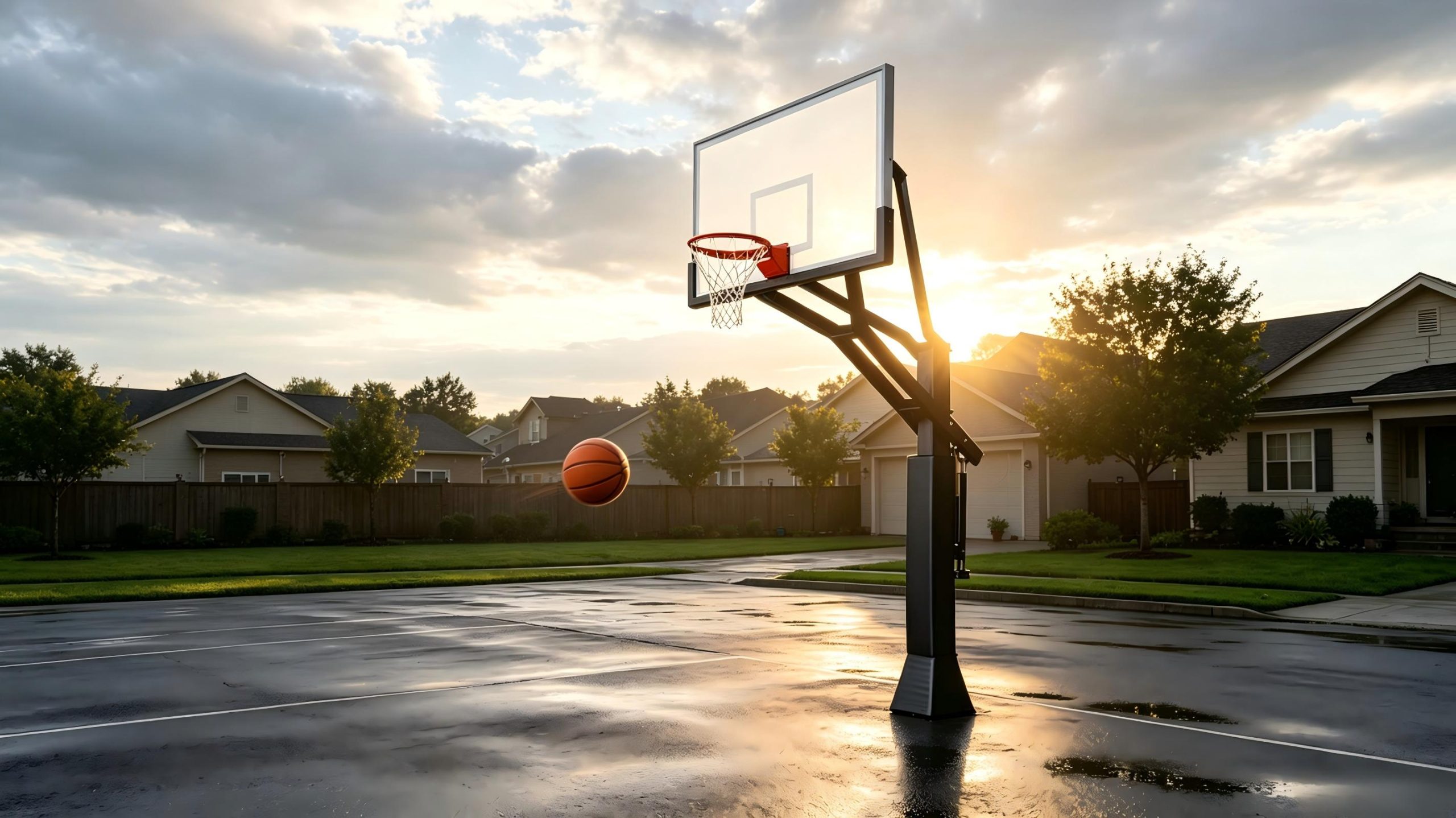
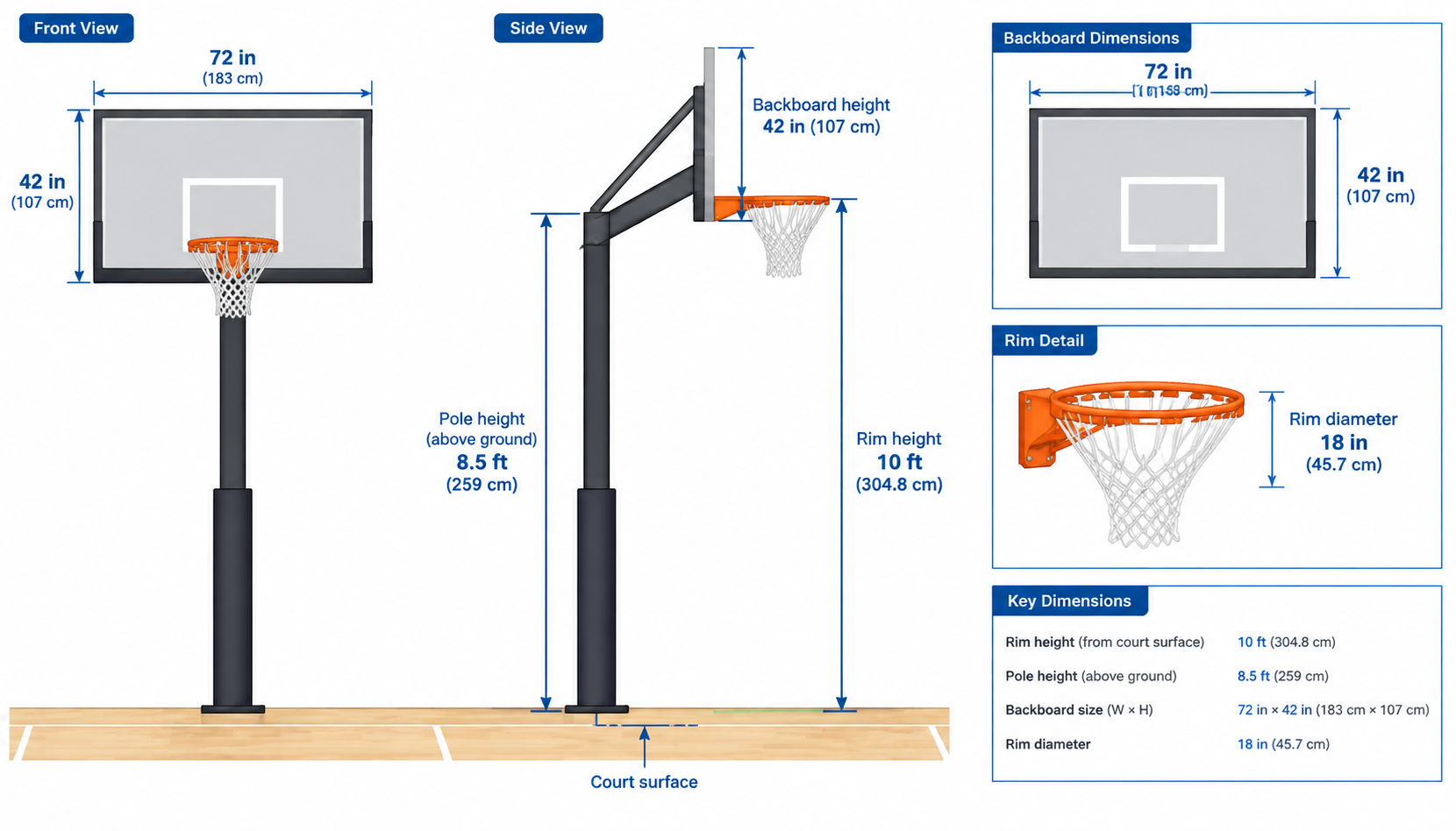
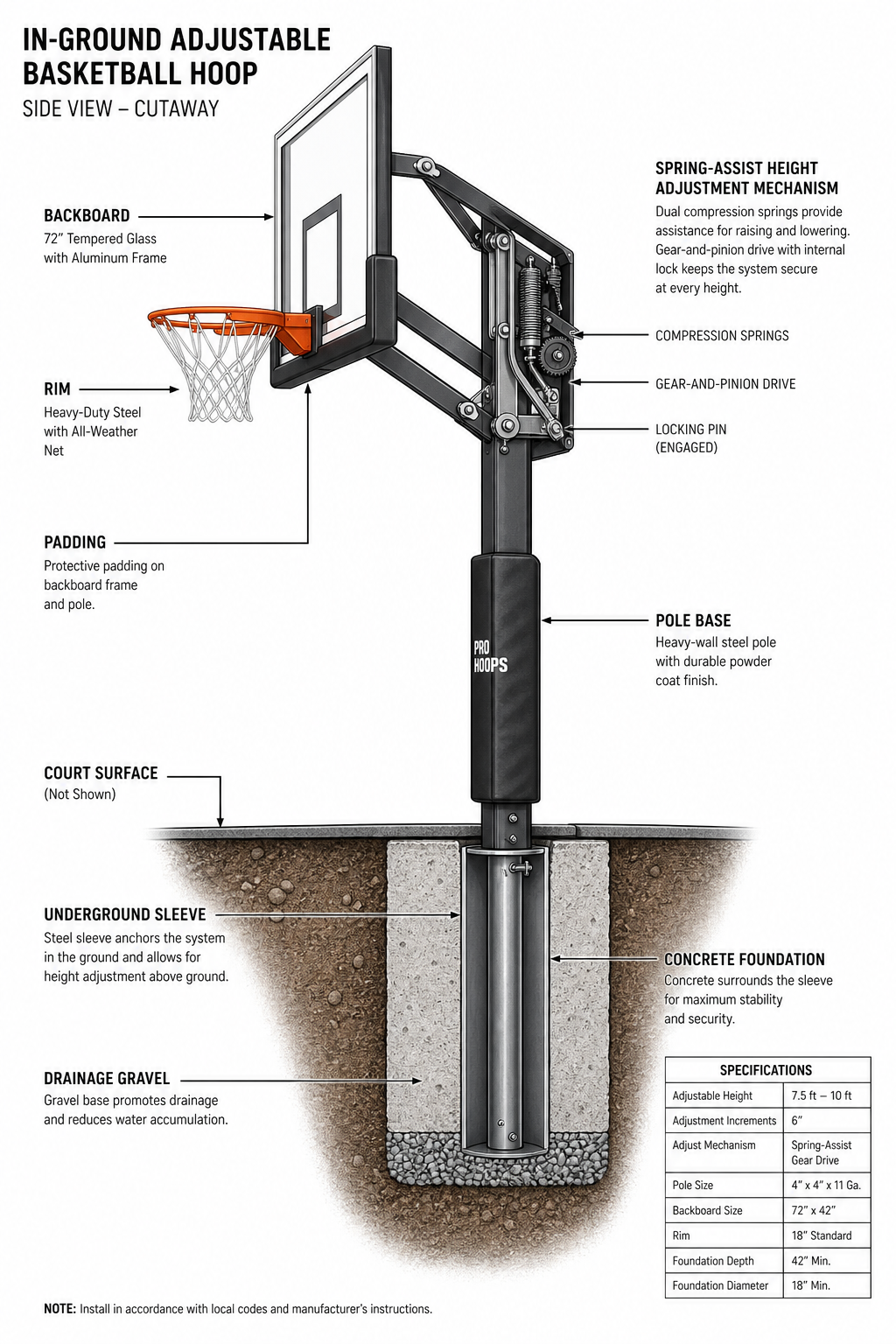
Ensuring the safety of students and staff is paramount for any educational institution. When it comes to sports equipment, basketball hoops, in particular, require meticulous attention to safety standards. As a school procurement manager, facility administrator, or safety officer, understanding these critical benchmarks is not just about compliance; it’s about safeguarding young athletes and future generations.
This comprehensive guide from EVERGRAND SPORT, a trusted global manufacturer, delves into the seven essential safety standards that every school should consider when purchasing, installing, and maintaining basketball hoops. Our goal is to equip you with the knowledge to make informed decisions, minimize risks, and provide a secure environment for school sports.
Key Takeaways for School Basketball Hoop Safety
- Backboard Safety: Prioritize tempered glass or durable acrylic backboards with protective padding and breakaway rims.
- Rim Integrity: Ensure rims are heavy-duty, double-spring breakaway designs with anti-entrapment features.
- Structural Stability: Verify the pole, extension arm, and base (for portables) are robust, properly anchored, and free from sharp edges.
- Adjustment System Reliability: Select hoops with secure, tamper-proof adjustment mechanisms to prevent accidental lowering.
- Padding Requirements: Insist on adequate pole, backboard, and base padding made from high-density, impact-absorbing materials.
- Corrosion Resistance: Choose hoops with galvanized or powder-coated steel components for outdoor durability and longevity.
- Professional Installation & Maintenance: Emphasize expert installation and a regular inspection schedule to maintain safety compliance.
Why Are Safety Standards Crucial for School Basketball Hoops?
The basketball court is a dynamic environment, especially in schools where students of varying ages and skill levels participate. Without adherence to stringent safety standards, basketball hoops can pose significant risks.
Protecting Students and Staff
The primary concern is always the well-being of individuals. Unsafe basketball equipment can lead to a range of injuries, from minor cuts and bruises to severe head trauma, fractures, or even fatalities. This can result from backboard shattering, rim collapse, pole instability, or accidental height adjustments. Proper standards ensure components are designed, manufactured, and installed to withstand typical play, preventing such incidents.
Mitigating Liability Risks
Schools have a legal and ethical responsibility to provide a safe environment. Accidents due to faulty or non-compliant equipment can lead to costly lawsuits, reputational damage, and severe financial repercussions for the institution. Adhering to recognized safety standards demonstrates due diligence and significantly reduces potential liability.
Ensuring Equipment Longevity and Performance
While safety is paramount, compliance also indirectly contributes to the longevity and performance of the equipment. Components built to higher standards use better materials and construction techniques, leading to more durable hoops that require less frequent replacement and maintenance. This represents a significant long-term cost saving for schools.
Understanding Key Regulatory Bodies and Certifications
Globally, several organizations set benchmarks for sports equipment safety. Familiarity with these standards is essential for making informed procurement decisions.
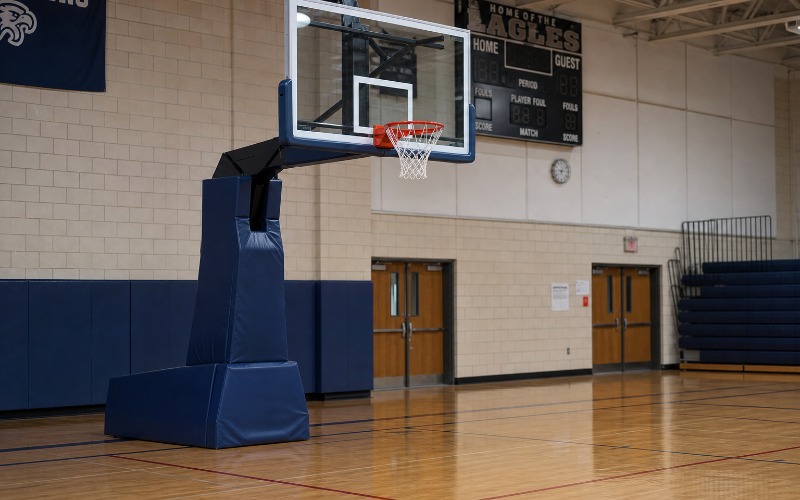
ASTM International (F2906-11)
ASTM F2906-11, specifically “Standard Test Methods for Basketball Systems,” is a critical American standard. It covers structural integrity, stability, and performance testing for various basketball systems, including portable, in-ground, and wall-mounted units. It addresses aspects like tip-over stability, rim strength, and backboard integrity under stress. Compliance with ASTM F2906 is a strong indicator of a product’s safety and durability in the North American market.
NFHS (National Federation of State High School Associations)
The NFHS establishes rules and guidelines for high school sports in the United States, including equipment specifications. While primarily focused on playability, their guidelines often incorporate safety aspects regarding backboard dimensions, rim height, and padding requirements to ensure fair and safe competition at the high school level.
DIN EN 1270 (European Standard)
For European schools and facilities, DIN EN 1270 “Playing field equipment – Basketball equipment – Functional and safety requirements, test methods” is the defining standard. It classifies basketball equipment based on usage (e.g., training, competition) and sets rigorous requirements for stability, resistance, safety against entrapment, and protection of players, including detailed specifications for backboards, rims, and support structures.
FIBA (International Basketball Federation)
FIBA standards are primarily for competitive, professional-level basketball. However, some advanced school facilities, especially those hosting regional or national tournaments, may opt for FIBA-approved equipment. These standards are exceptionally strict, covering every aspect from court dimensions to the structural integrity and performance of the entire basketball system, ensuring the highest level of safety and playability.
What Are the 7 Essential Safety Standards?
Here, we detail the core safety elements that MUST be evaluated when selecting basketball hoops for school environments.
1. Backboard Material and Breakaway Features
The backboard is often the most visible and vulnerable part of a basketball system. For school use, durability and safety are key.
- Material Safety: Tempered glass is the gold standard for competition due to its clear rebound and safety (it shatters into small, blunt pieces rather than sharp shards). Acrylic or polycarbonate are excellent alternatives for high-traffic or outdoor school settings, offering superior impact resistance and often lower cost, though with a slightly different rebound. Avoid cheap, thin acrylic or non-tempered glass.
- Breakaway Rim Necessity: A breakaway rim is non-negotiable for school hoops. It prevents backboard shattering and pole deformation by flexing downward under force (e.g., dunking) and then springing back. This protects both the player and the equipment.
- Edge Protection: All backboards, especially tempered glass, must have robust padding or an aluminum frame with protective edge trim to prevent cuts and abrasions if a player collides with it.
2. Rim Design and Attachment Strength
The rim is subjected to immense force during play. Its design and attachment method are critical for safety.
- Double-Spring Breakaway Design: Opt for rims with a double-spring mechanism for optimal shock absorption and longevity. This design ensures consistent performance and reduces the risk of rim failure.
- Load Testing Requirements: Reputable manufacturers perform rigorous load testing to ensure rims can withstand hundreds of pounds of downward force without failing. Demand evidence of such testing.
- Anti-Entrapment Features: The net attachment system should prevent fingers or clothing from getting caught, a common hazard with poorly designed rims. Recessed hooks or continuous wire systems are preferred.
3. Pole and Extension Arm Stability & Padding
The structural integrity of the main support system is fundamental to overall safety.
- Heavy-Gauge Steel Construction: The main pole and extension arm should be constructed from robust, heavy-gauge steel to prevent bending, swaying, or collapse. Square or large round poles offer superior rigidity.
- Anchoring Mechanisms: For in-ground hoops, a deep, secure concrete anchor is vital. Wall-mounted systems require professional installation into structural supports. Portable hoops demand heavy, stable bases.
- Required Padding Dimensions and Material: All poles within a specified distance of the playing area (typically 4-6 feet) must be fully padded with high-density, impact-absorbing foam, usually 1-2 inches thick. Backboard edges and the bottom of the backboard also require padding.
4. Adjustment Mechanism Reliability
Adjustable hoops are popular in schools, but their adjustment systems must be fail-safe.
- Safety Lock Systems: The mechanism must have a secure locking feature to prevent accidental or unauthorized lowering, especially critical in unsupervised settings. Pin-locking systems or robust crank mechanisms are common.
- Ease of Adjustment: While safety is first, an easy-to-use system (e.g., crank-assist, spring-assist) encourages proper height changes rather than unsafe workarounds.
- Preventing Accidental Lowering: The system should be designed to hold the desired height securely, even under stress or during play, preventing sudden drops that could injure players.
5. Base Stability and Counterbalance (for Portable Hoops)
Portable hoops, while versatile, present unique stability challenges. Their base is the most critical safety component.
- Water/Sand Fill Capacity: The base must be designed to hold a significant amount of water or sand (often 30-50+ gallons) to provide adequate counterbalance and prevent tipping.
- Wheel Locking Mechanisms: Any wheels on portable hoops should have reliable locking mechanisms to prevent unwanted movement during play.
- Tip-Over Prevention: The overall design, including the footprint of the base and the weight distribution, should be engineered to resist tipping, even if a player hangs on the rim (which should be discouraged, but anticipated).
6. Corrosion Resistance and Weatherproofing
For outdoor hoops, resistance to environmental elements is key to maintaining structural integrity and appearance over time.
- Powder Coating, Galvanized Steel: Steel components should be either hot-dip galvanized or electrostatic powder-coated to prevent rust and corrosion, which can weaken the structure and pose sharp hazards.
- Suitable for Outdoor Use: Ensure all materials (backboard, net, hardware) are UV-resistant and designed for continuous outdoor exposure without degradation.
- Maintenance for Longevity: Even with resistant materials, regular cleaning and inspection for rust or wear are crucial for prolonging the life and safety of outdoor units.
7. Installation, Inspection, and Maintenance Protocols
Even the safest equipment can become a hazard if improperly installed or neglected.
- Professional Installation: Always opt for professional, factory-certified installation. Incorrect anchoring, alignment, or assembly can compromise the entire system’s safety.
- Regular Inspection Checklist: Implement a routine inspection schedule (e.g., monthly, quarterly, annually) covering all components: backboard cracks, rim attachment, net integrity, pole stability, padding condition, adjustment mechanism function, and base leaks/fill levels.
- Preventative Maintenance Schedule: Address minor issues promptly. Tighten loose bolts, replace worn padding, check for rust, and ensure all moving parts are lubricated. Keep detailed records of inspections and maintenance.
Technical Comparison: Key Safety Features Across Hoop Types
Different types of basketball hoops have varying safety considerations. This table highlights key features for each.
| Safety Feature | Portable Hoops (School Use) | In-Ground Hoops (School Use) | Wall-Mounted Hoops (School Use) |
| Backboard Material | Acrylic or Polycarbonate (shatter-resistant, lighter) | Tempered Glass or Acrylic (for clear rebound & durability) | Tempered Glass or Acrylic (space-saving, durable) |
| Rim Type | Double-spring breakaway, heavy-duty | Double-spring breakaway, heavy-duty, direct-mount | Double-spring breakaway, heavy-duty, direct-mount |
| Pole/Frame Construction | Multi-piece or single-piece heavy-gauge steel | Single-piece heavy-gauge steel, corrosion-resistant | Heavy-gauge steel extension arms, robust mounting plate |
| Stability/Anchoring | Large, heavy base (water/sand filled); wide footprint | Deep concrete footer, direct buried or anchor kit | Securely bolted to structural studs/concrete wall |
| Padding Requirements | Pole padding, front base padding | Pole padding, backboard padding (bottom edge) | Backboard padding (bottom edge), potentially wall padding |
| Adjustment Mechanism | Crank or spring-assist with safety lock | Crank or hydraulic lift with safety lock | Fixed height or crank/hydraulic with safety lock |
| Corrosion Resistance | Powder-coated frame, rust-resistant hardware | Galvanized or powder-coated pole, stainless hardware | Powder-coated frame, stainless hardware |
Selecting Compliant Basketball Hoops for Your School
Assess Facility Needs and Usage
Before procurement, evaluate where the hoops will be used (indoor gym, outdoor blacktop, multi-sport court), the age groups playing, and the expected intensity of use (recreational vs. competitive). This will guide decisions on material, adjustability, and overall system robustness.
Prioritize Certifications and Supplier Reputation
Always seek out products that explicitly state compliance with relevant safety standards (ASTM F2906, DIN EN 1270, NFHS). Choose suppliers with a proven track record of quality, safety, and reliability in the B2B sports equipment sector. Request product specifications, testing reports, and warranty information.
Budgeting for Safety and Durability
While cost is always a factor, view basketball hoop safety as an investment, not an expense. Prioritizing higher-quality, compliant equipment will minimize risks, reduce long-term maintenance costs, and ultimately provide a safer, more durable playing experience for students.
EVERGRANDSPORT: Your Partner in Safe School Sports Equipment
At EVERGRANDSPORT, we understand the unique demands of school environments. We are committed to manufacturing basketball hoops and sports equipment that not only meet but exceed international safety standards. Our extensive range of portable, in-ground, and wall-mounted systems are designed with premium materials, advanced safety features, and robust construction to ensure maximum player protection and equipment longevity.
Partner with EVERGRANDSPORT for your school’s sports facility needs. Our expert team is ready to assist you in selecting the ideal, compliant, and durable basketball hoops that will stand the test of time and active student use. Contact us today for a consultation or to request a detailed quote for your project.
Frequently Asked Questions (FAQ)
While all features are important, the most critical safety features are the structural stability of the entire system (pole, base, mounting) and the inclusion of a high-quality breakaway rim. These elements directly prevent catastrophic failures and severe player injuries.
School basketball hoops should undergo a quick visual inspection before each use, a detailed inspection monthly, and a comprehensive professional inspection annually. Any issues identified during these checks should be addressed immediately.
Yes, portable basketball hoops can be safe for school use, provided they meet stringent stability standards, have a sufficiently weighted base, and are regularly inspected to ensure the base is filled and wheels are locked during play. They are ideal for facilities requiring flexibility.
Look for certifications like ASTM F2906-11 (for North America) and DIN EN 1270 (for Europe). Compliance with NFHS guidelines is also important for high school-level play. These certifications indicate the product has been independently tested for safety and performance.
Sometimes. Older hoops can often be upgraded with new breakaway rims, backboard padding, or pole padding. However, if the main pole or base structure is compromised, or if the overall design is fundamentally unsafe by current standards, full replacement may be the only safe option. Consult with a qualified sports equipment professional.