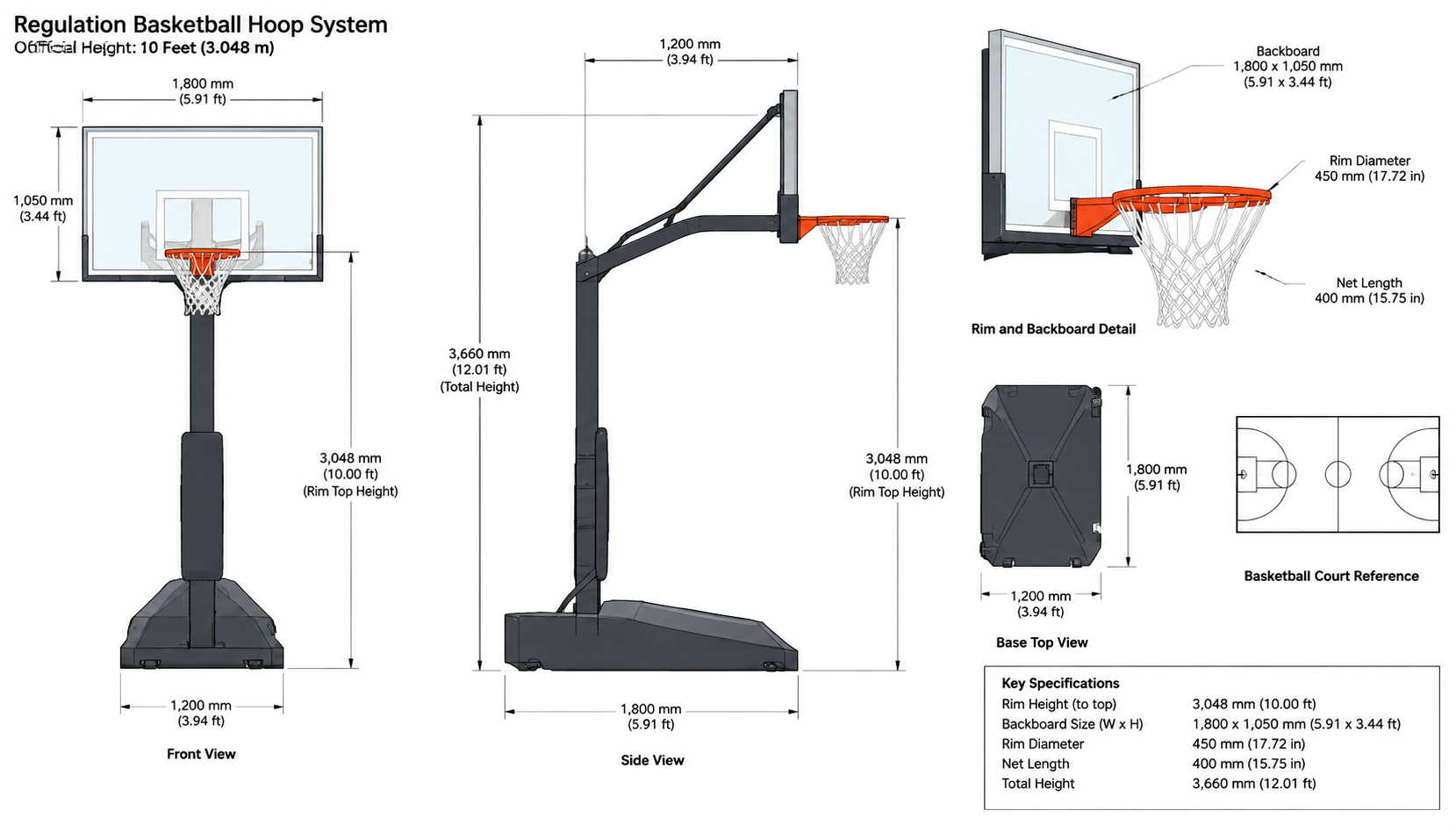
Basketball hoop height is standardized at 10 feet (3.05 meters) for professional, collegiate, and high school play. This regulation height, set by Dr. James Naismith in 1891, remains consistent across NBA, NCAA, FIBA, and most competitive leagues. However, youth leagues often use lower heights to encourage correct technique and enjoyment. This guide covers official heights, age-specific recommendations, measurement methods, and buying considerations for your next basketball hoop.
Not sure which basketball hoop system is right for your project? Explore our comprehensive Basketball Hoop Buying Guide to compare installation types, materials, safety standards, and selection tips before making your decision.
Key Takeaways
- The regulation basketball hoop height for professional, college, and high school levels is 10 feet (3.05 meters) from the floor to the top of the rim.
- Youth leagues often use lower hoops: ages 5-7 use 8 feet, ages 8-10 use 9 feet, and ages 11+ transition to 10 feet.
- Proper hoop height is crucial for skill development, proper shooting form, and injury prevention.
- Adjustable basketball hoops allow you to change heights for different players and age groups.
- Always measure from the playing surface to the rim top, using a level to ensure accuracy.
Why 10 Feet Became the Standard Height
When Dr. James Naismith invented basketball in 1891, he hung peach baskets on the railing of a balcony in the Springfield YMCA. That balcony happened to be 10 feet above the gym floor. The height was never changed for practical or strategic reasons. Over time, players adapted, and the 10-foot rim became integral to the game’s balance between scoring and defense.
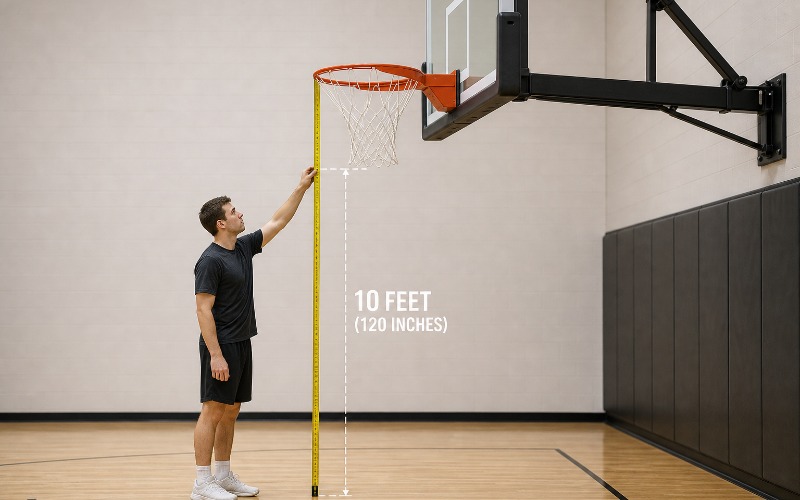
One reason the height remained is that raising or lowering the rim would alter the game’s dynamics. A lower rim would favor tall players and reduce the challenge, while a higher rim would make scoring too difficult. The 10-foot standard provides a perfect challenge for athletes of average to elite stature.
Official Regulation Heights by Level
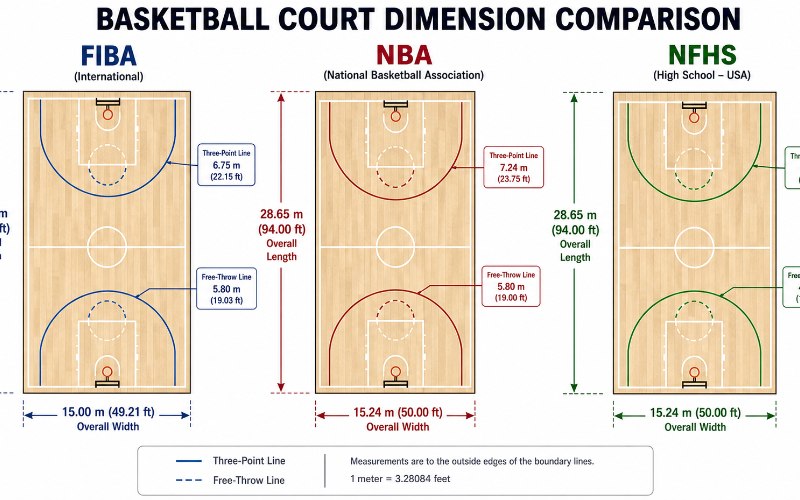
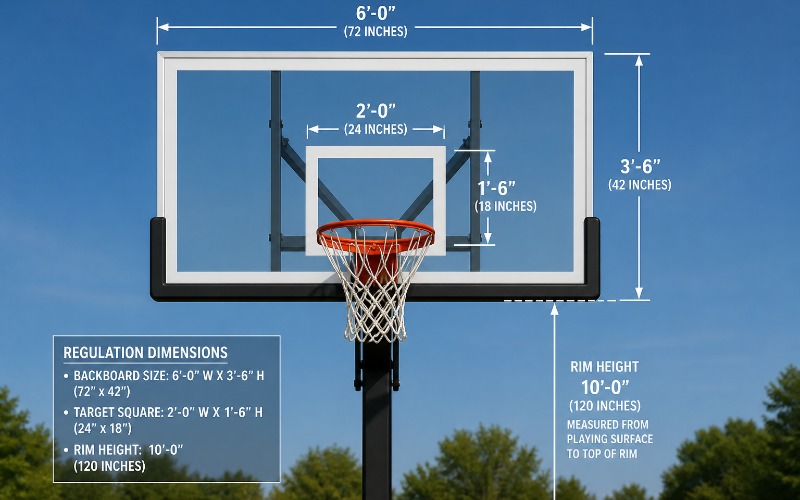
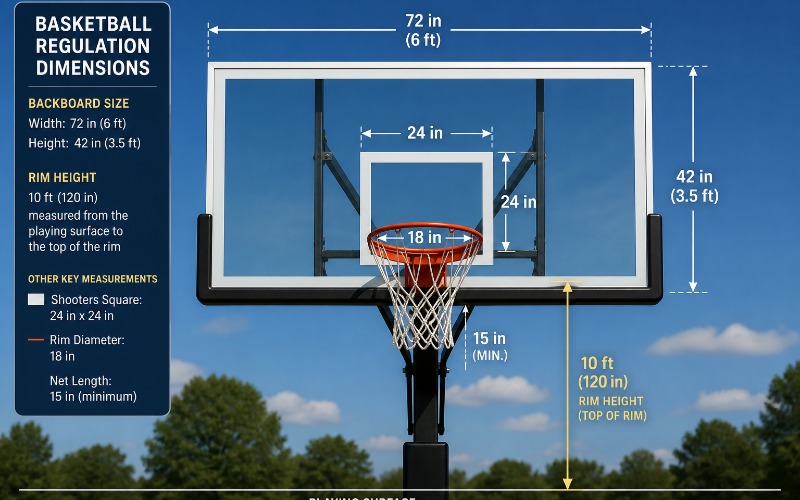
Every major basketball organization adheres to the 10-foot regulation height. Below is a comparison table specifying hoop height, rim diameter, and backboard dimensions for different levels.
| Level | Hoop Height | Rim Diameter | Backboard Dimensions |
|---|---|---|---|
| NBA | 10 ft (3.05 m) | 18 in (46 cm) | 6 ft × 3.5 ft (183 × 107 cm) |
| NCAA (Men’s & Women’s) | 10 ft (3.05 m) | 18 in (46 cm) | 6 ft × 3.5 ft (183 × 107 cm) |
| FIBA (International) | 10 ft (3.05 m) | 18 in (46 cm) | 6 ft × 3.5 ft (183 × 107 cm) |
| High School (NFHS) | 10 ft (3.05 m) | 18 in (46 cm) | 5.5 ft × 3 ft (168 × 91 cm) typical |
As shown, the rim height and diameter are universal. Backboard size may vary for high school play, but all sanctioned games use a 10-foot rim. Always follow your league’s specific regulations.
Youth Basketball Hoop Heights by Age Group
Younger players benefit from lower hoops to develop proper shooting mechanics and build confidence. National organizations like NBA Jr. NBA and FIBA Youth provide these age-based recommendations:
- Ages 5–7: Use an 8-foot (2.44 m) rim. This height helps children shoot with correct form without arm strain.
- Ages 8–10: Use a 9-foot (2.74 m) rim. It gradually introduces a higher target while still being reachable.
- Ages 11 and older: Transition to the standard 10-foot (3.05 m) rim. Most players at this age have sufficient strength and height.
Adjustable basketball hoops are ideal for families with children of different ages. They allow you to modify the height quickly as kids grow, ensuring continuous developmental alignment.
How to Measure and Adjust Basketball Hoop Height
Setting the correct hoop height is simple if you follow a few steps. Whether you have an adjustable portable hoop or an in-ground basketball system, accuracy matters.
- Gather tools: A tape measure (at least 12 ft), a level, and a helper for safety.
- Measure from the playing surface directly under the rim. Place the tape on the floor and extend to the top edge of the rim (not the net).
- Verify the rim is level. Place a level on top of the rim. Adjust the mounting if the bubble is off-center.
- Adjust height: For telescoping or crank mechanisms, turn the handle or release the lock pins to raise or lower. Always lock the mechanism before play.
- Double-check after adjustment to ensure the height is accurate and stable.
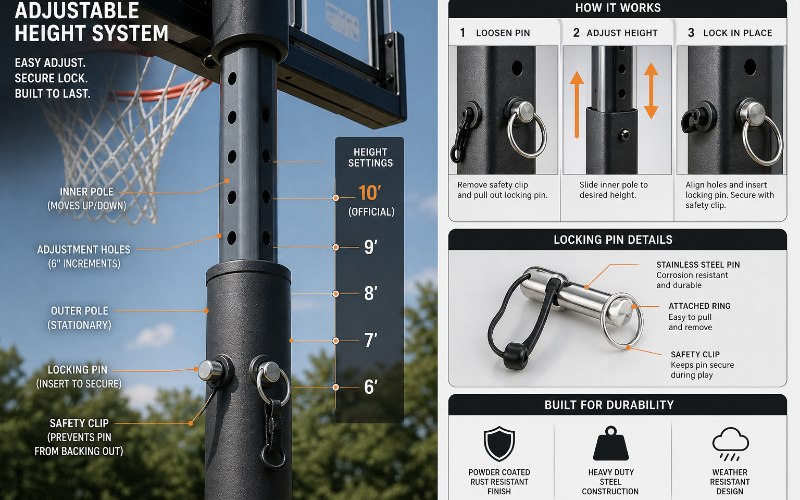
For permanent in-ground hoops, height is typically fixed. If you need a different height, consider an adjustable unit or a conversion kit. Most portable hoops offer 7.5 ft to 10 ft adjustment range.
Factors to Consider When Purchasing a Basketball Hoop
Choosing the right basketball hoop involves evaluating several factors beyond height. Below are key considerations for public, school, or home use.
Portable vs. In-Ground Systems
Portable basketball hoops have a base that can be filled with water or sand. They are easy to move and ideal for driveways or community parks. In-ground basketball hoop systems are permanent, offering superior stability and durability. Commercial facilities typically choose in-ground goals.
Backboard Material and Size
Backboards come in steel, acrylic, polycarbonate, tempered glass, and wood. Tempered glass provides the best rebound and is standard for competitive play. Larger backboards (e.g., 54 in or 60 in) offer more rebound area for practicing off-angle shots.
Adjustability Mechanism
Common mechanisms include crank, pneumatic, and slide-lock. Crank systems are the smoothest and most durable for frequent height changes. For youth programs, a simple locking pin may suffice.
Safety and Compliance
Ensure the hoop meets ASTM, EN, or local safety standards. Look for padding on the backboard and pole, especially in school or public settings. Breakaway rims reduce injury risk by flexing when dunked.
Frequently Asked Questions
What is the standard height for a basketball hoop?
The standard basketball hoop height is 10 feet (3.05 meters) from the floor to the top of the rim. This applies to all professional, collegiate, and high school competitions worldwide.
How high is a basketball hoop in the NBA?
The NBA uses the same 10-foot regulation height as other levels. No league changes this dimension, ensuring consistency across competitive basketball.
What height should a basketball hoop be for a 10-year-old?
For ages 8–10, a 9-foot rim is recommended. A 10-year-old may be ready for 10 feet depending on strength. Observe their shooting form; if it breaks down, lower the hoop.
Can you lower a basketball hoop?
Yes, many modern hoops have adjustable mechanisms that allow heights from 7.5 feet to 10 feet. Always secure the locking system before play.
How do I check if my hoop is regulation height?
Use a tape measure from the playing surface to the top edge of the rim. Use a level to ensure the rim is horizontal. A deviation of more than 1/4 inch can affect shooting accuracy.
Is the hoop height different for women’s basketball?
No. Women’s basketball at the NCAA and professional (WNBA) levels also uses a 10-foot rim the same as men’s. No organized basketball uses a different hoop height by gender.
What is the height of a standard backboard?
A regulation backboard is 3.5 feet (1.07 meters) tall, with the rim centered 2 inches below the top. The bottom of the backboard is 4 feet above the floor, placing the rim at 10 feet.
Conclusion: Choose the Right Hoop for Your Needs
Understanding the standard basketball hoop height helps you make informed decisions whether you’re buying for a school, park, or home. Stick to regulation heights for competitive play, and lower rims for younger players to foster growth. EVERGRAND Sport offers a wide range of adjustable, in-ground, and portable basketball hoops that meet all safety and performance standards. Contact us today to discuss your project or wholesale requirements.
This article was written by the sports equipment experts at EVERGRAND SPORT – your trusted partner in basketball and soccer equipment manufacturing.