Choosing the right basketball backboard size is critical for performance, safety, and enjoyment. Whether you’re outfitting a school gym, a community park, or a home driveway, backboard dimensions directly affect how the game is played. This guide covers all standard sizes, materials, and selection factors to help you make an informed purchase.
Key Takeaways
- Standard backboard sizes range from 44″ to 72″ width, with 54″ and 60″ being most common for residential use.
- NBA and FIBA regulations require a 72″ wide by 42″ high backboard.
- Larger backboards provide better rebound control and shooting angles, especially for advanced players.
- Backboard material—tempered glass, acrylic, or steel—affects durability and rebound quality.
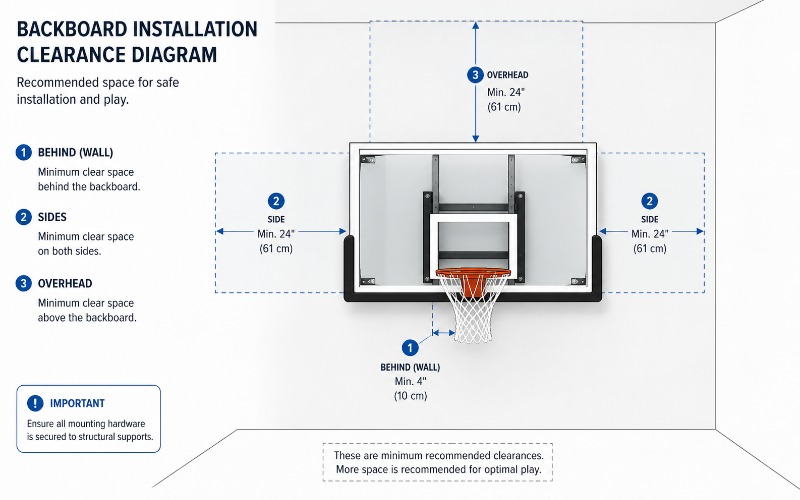
- Proper installation requires adequate space: at least 10–12 feet of clearance behind the backboard.
Why Does Backboard Size Matter?
A backboard’s size influences rebounding, shooting angles, and overall playing experience. Larger backboards give players a bigger target and better ball response. They also affect safety margins and court layout. For serious players, a regulation-size backboard offers the most consistent training.
What Are the Standard Basketball Backboard Sizes?
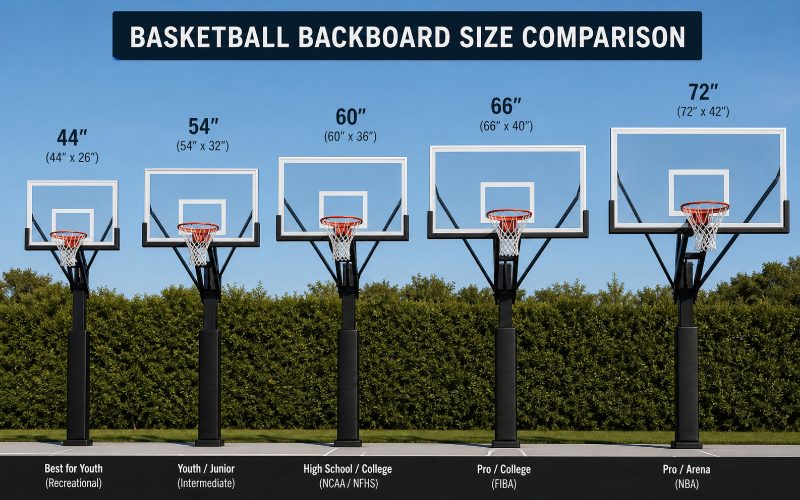
Backboard sizes are measured by width across the board. Common widths include 44 inches, 48 inches, 54 inches, 60 inches, and 72 inches. Height is typically 36 inches for most home models, but regulation backboards are 42 inches tall. The table below lists typical uses for each size.
| Width (inches) | Height (inches) | Typical Use | Recommended For |
|---|---|---|---|
| 44″ | 30–36″ | Compact residential, short hoop | Children, limited space |
| 48″ | 36″ | Residential, intermediate | Home driveways, casual play |
| 54″ | 36″ | Residential, standard | Most home systems, recreational |
| 60″ | 36–42″ | Residential / commercial entry | Enthusiasts, schoolyards |
| 72″ | 42″ | Official regulation (NBA/FIBA) | Gyms, competitive courts |
When selecting a size, consider the skill level of primary users, available space, and the quality of the hoop system. Larger backboards require stronger support structures.
How to Choose the Right Backboard Size for Your Needs?
Start by evaluating who will play most often. For young children, a 44″ or 48″ backboard paired with an adjustable hoop works well. Teens and adults benefit from a 54″ or 60″ board. Competitive players should aim for a 72″ regulation board. Next, measure your court area. You need at least 10 feet of clear space behind the backboard for safe play. Also consider the mounting system—portable units often have smaller backboards for stability, while in-ground systems can support larger sizes.
Before selecting a basketball hoop system, it’s important to understand the differences between portable, in-ground, wall-mounted, and ceiling-mounted models. Read our Ultimate Basketball Hoop Guide for a complete overview of system types, technical specifications, installation requirements, and professional buying advice.
Backboard Size Comparison: Materials and Performance
Backboard material interacts with size to affect performance. Tempered glass offers the best rebound consistency and is used for regulation backboards. Acrylic is lighter and cheaper but can lose responsiveness over time. Steel is durable but provides a hard, non-regulation feel. Larger backboards made from tempered glass maximize performance but cost more. Below is a comparison of common materials across different sizes.
| Material | Durability | Rebound Quality | Cost per sq.ft. | Best Size Range |
|---|---|---|---|---|
| Acrylic | Moderate | Good | Low | 44″–54″ |
| Steel | High | Fair | Medium | 48″–60″ |
| Tempered Glass | High | Excellent | High | 54″–72″ |
For home use, a 54″ acrylic backboard balances cost and playability. Schools and clubs should invest in 60″ or 72″ tempered glass boards to meet competitive standards.
How Does Backboard Size Affect Playing Experience?
Backboard size directly impacts bank shots, rebounding, and ball control. A larger board gives you a bigger margin for error on bank shots and improves rebound angles. It also enhances safety by reducing ball deflection into obstacles. In contrast, smaller backboards demand more precision and can frustrate developing players. For solo practice, a regulation-size board better simulates game conditions.
What Are the Official NBA and FIBA Backboard Dimensions?
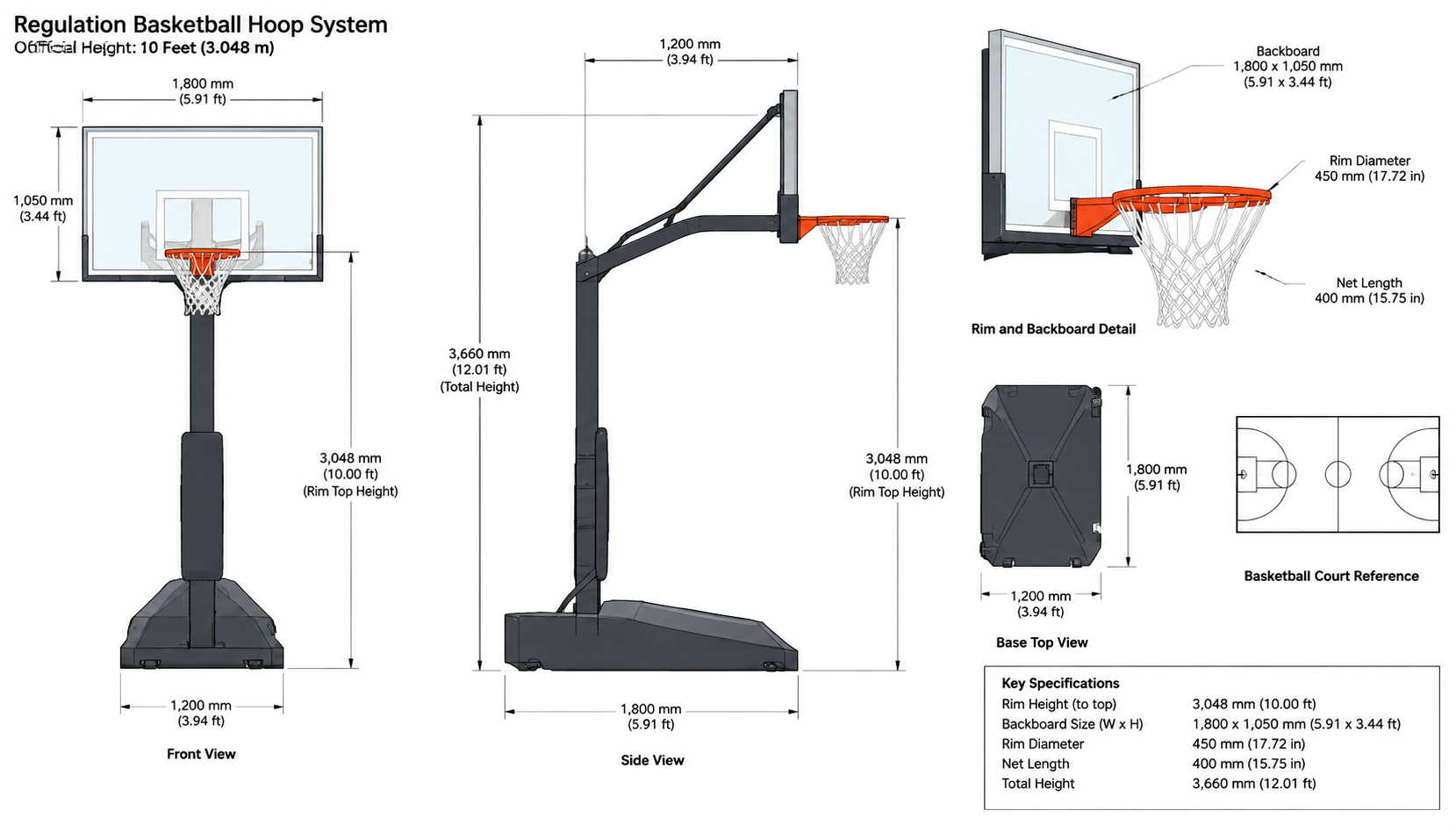
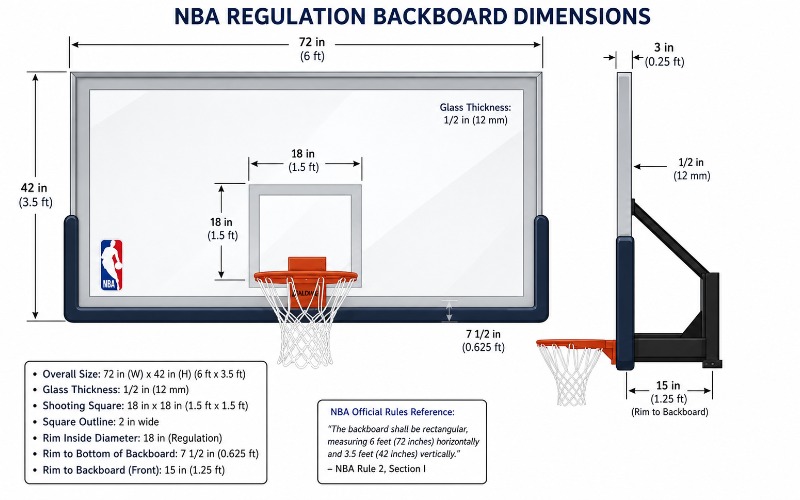
The NBA and FIBA specify backboards as 72 inches (6 feet) wide and 42 inches (3.5 feet) tall. The inner rectangle on the backboard is 24 inches wide by 18 inches tall. The front of the backboard extends from the goalpost, with a 180-degree angle for the goal ring. These dimensions are mandatory for professional, college, and many high school leagues.
Installation and Space Requirements for Different Backboard Sizes
Proper installation is crucial for safety and performance. For residential units, ensure the ground is level and the hoop is secured per manufacturer guidelines. Portable systems with larger backboards require heavier bases to prevent tipping. In-ground systems offer more stability for 60″ and 72″ boards. Always maintain clearance: at least 10–12 feet behind the backboard, 6 feet on each side, and 8 feet overhead for high-arcing shots.
Frequently Asked Questions about Basketball Backboard Sizes
A 54-inch backboard is the most popular choice for residential driveways. It provides a good balance of playing experience and space efficiency. If you have ample room and want a more authentic feel, consider a 60-inch board.
Yes, but you need a strong support system and sufficient space. In-ground mounting is recommended. Also, check local regulations for hoop placement to avoid obstructing sidewalks or roads.
Elementary schools often use 54-inch boards, while middle and high schools use 60-inch or 72-inch boards for competition. Regulation dimensions (72″x42″) are required for official games.
Backboard height is measured from the top edge to the bottom edge. For regulation, it is 42 inches. Most residential backboards are 30 to 36 inches tall. The rim height is standardized at 10 feet from the court surface.
Yes. Larger backboards add weight and wind resistance. Portable units with 60″ or 72″ boards require heavier bases (often water or sand filled) for stability. This can make them harder to move.
Conclusion: Partner with EVERGRAND Sport for Quality Basketball Systems
Selecting the correct backboard size ensures better play, safety, and investment longevity. EVERGRAND Sport offers a wide range of basketball backboards from 44″ to 72″, available in acrylic, steel, and tempered glass. Our systems meet international standards and are suitable for residential, school, and commercial projects. Contact us for custom bulk orders and expert advice on your next basketball installation.