Key Takeaways
- The standard rim height for basketball is 10 feet (3.05 meters) for all competitive levels.
- Official rim diameter is 18 inches (45.72 cm) with a 0.625-inch-thick ring.
- Backboard sizes range from 44 inches for youth to 72 inches for professional play.
- Basketball hoop dimensions differ between NBA, NCAA, high school, and FIBA regulations.
- Proper installation requires at least 10 feet of clear space around the hoop for safe play.
When selecting a basketball hoop, understanding the standard dimensions is crucial for safety, performance, and regulatory compliance. Whether you are outfitting a school gym, community center, or personal driveway, the correct hoop dimensions ensure an authentic playing experience. This guide breaks down every measurement you need to know, from rim height to backboard size, and explains how these standards vary across age groups and competition levels.
What Are the Official Basketball Hoop Dimensions?
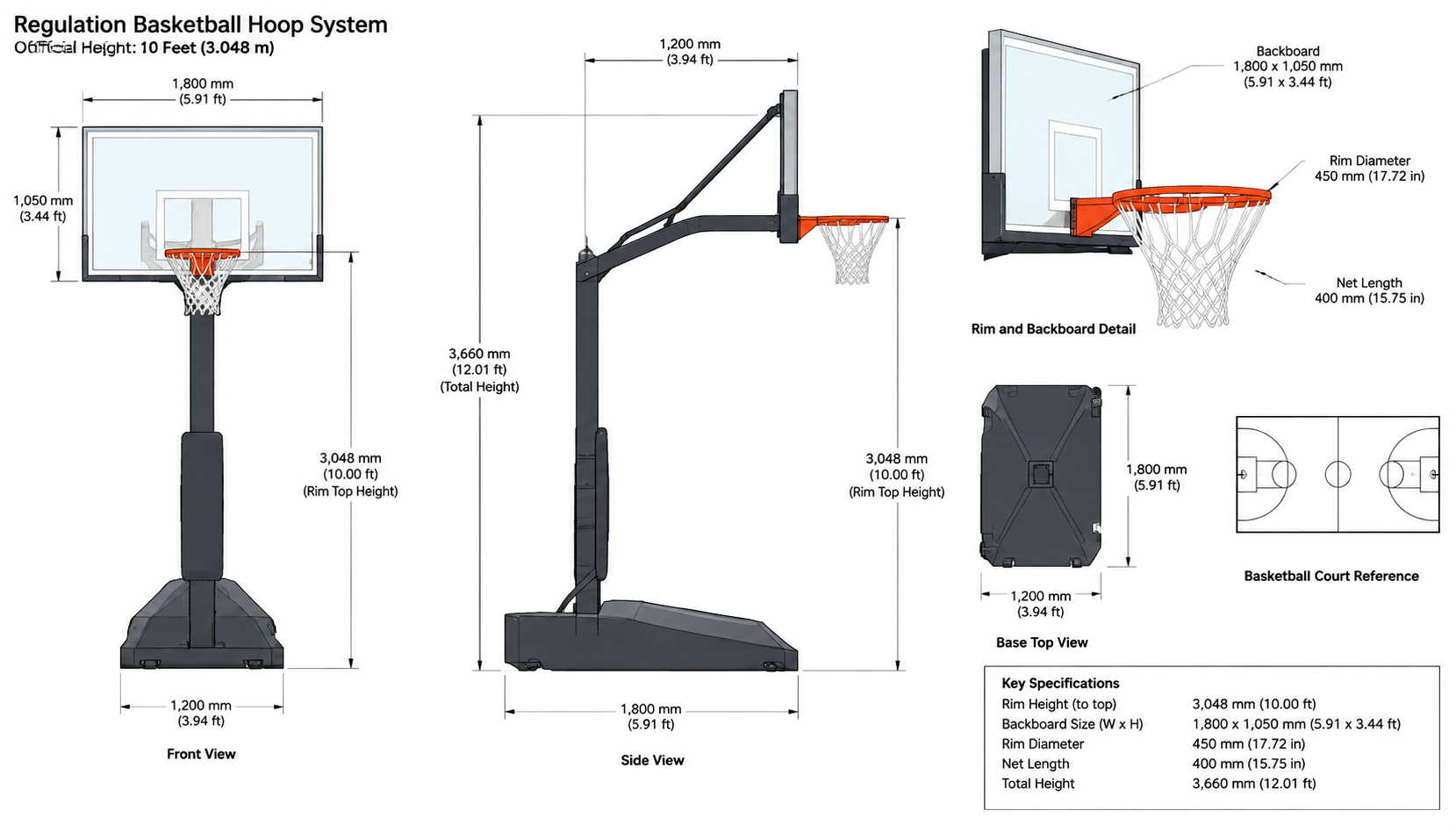
The official basketball hoop consists of a rim, backboard, and support pole. The rim has a net and must be rigidly mounted. All dimensions are specified by governing bodies like FIBA, NBA, NCAA, and NFHS.
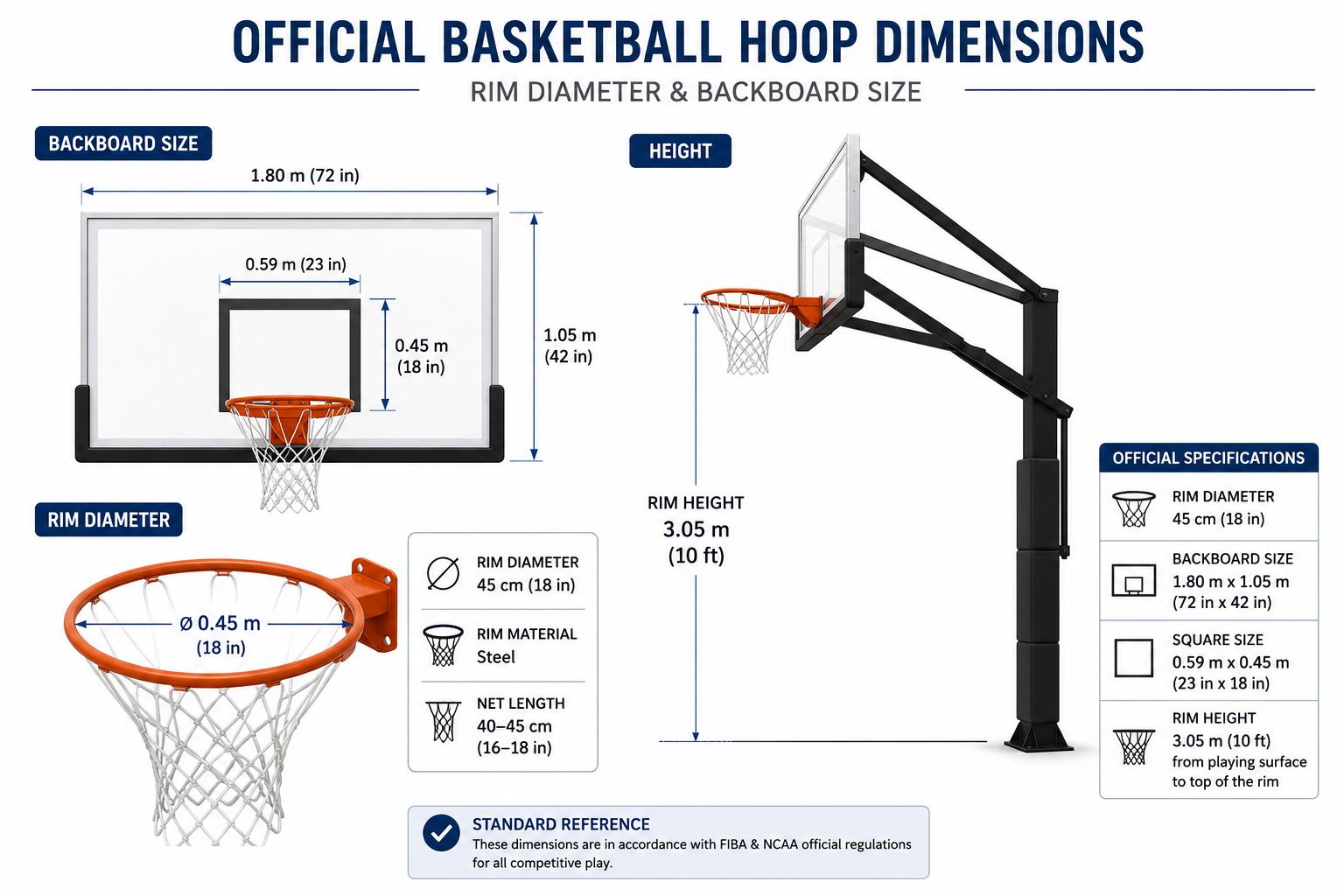
Rim (Hoop) Dimensions: The ring must have an inner diameter of 18 inches (45.72 cm). The rod itself is 5/8 inch (1.6 cm) thick. The rim is attached to the backboard 6 inches from the bottom edge. The top of the rim sits exactly 10 feet (3.05 m) above the playing surface.
Backboard Dimensions: For NBA and NCAA, the backboard is 72 inches (183 cm) wide and 42 inches (107 cm) tall. The inner rectangle behind the rim is 24 inches wide and 18 inches tall. High school rules allow backboards of 60 or 72 inches wide. Youth systems use smaller boards.
Support Pole: The pole should be placed at least 4 feet (1.2 m) from the baseline to prevent collisions. For in-ground systems, the pole diameter typically ranges from 3.5 to 5 inches. Portable hoops have a base that must weigh enough to anchor the unit.
What Is the Standard Rim Height for Basketball?
The universal rim height for basketball is 10 feet (3.05 m) from the floor to the top of the rim. This height is used in all professional, college, and high school competitions. For younger players, adjustable hoops allow lowering to 8 or 9 feet. Even the NBA and FIBA follow identical rim height standards. Consistency in height ensures skills transfer across different leagues.
Rim height must be level and rigid. During installation, use a level to ensure the rim is parallel to the floor. Off-level rims cause erratic ball bounce and increase injury risk. Certified installers check this carefully.
How Do Basketball Hoop Dimensions Vary by Level?
Different governing bodies have specific requirements. The table below shows key differences.
| Level | Rim Height | Backboard Size | Pole Offset |
|---|---|---|---|
| NBA | 10 ft (3.05 m) | 72″ x 42″ | 4 ft from baseline |
| NCAA Men/Women | 10 ft (3.05 m) | 72″ x 42″ | 4 ft |
| NFHS (High School) | 10 ft (3.05 m) | 60″ or 72″ x 36″ or 42″ | 3–4 ft |
| FIBA | 10 ft (3.05 m) | 71″ x 41″ (180×105 cm) | 5.25 ft (1.6 m) |
| Youth (8–12) | 8–9 ft (adjustable) | 44–54″ wide | 2–3 ft |
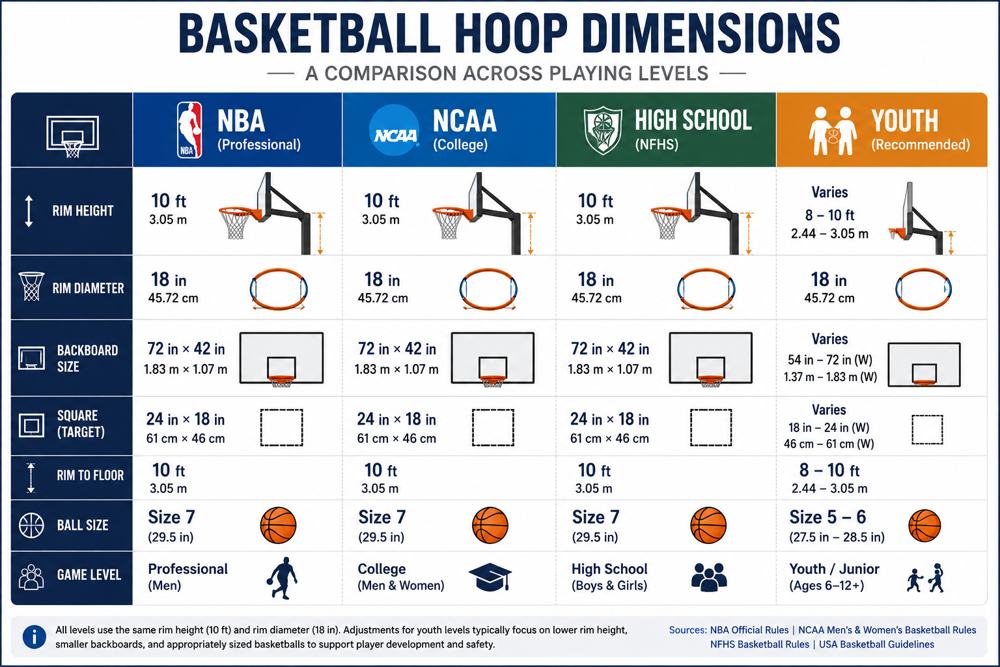
For competitive play, always check your league’s rulebook. Many local associations adopt NFHS or FIBA standards. Purchasing a hoop that meets multiple certifications ensures long-term usability.
What Are the Different Backboard Sizes?
Backboards come in several standard widths. The size you choose affects rebounding and court aesthetics. Larger boards offer more bounce-back consistency but require more space.
| Backboard Size | Width | Height | Best For |
|---|---|---|---|
| Full (72″) | 72″ (183 cm) | 42″ (107 cm) | Professional, College |
| Regulation (60″) | 60″ (152 cm) | 36″ (91 cm) | High School, Competitive |
| Intermediate (54″) | 54″ (137 cm) | 33″ (84 cm) | Residential, Recreational |
| Compact (44″) | 44″ (112 cm) | 28″ (71 cm) | Youth, Driveway |
Materials also vary: acrylic is common for cheap portable units, while tempered glass offers the best rebound (used in competition). Steel backboards are durable but have poor bounce. For serious play, invest in a tempered glass board.
How to Choose the Right Basketball Hoop for Your Court?
Selecting the correct hoop involves matching dimensions to your space, users, and budget.
- Space: Measure your court area. Allow at least 10 feet of clearance behind the backboard and 15 feet in front for the run-up. For sidelines, give 5 feet.
- Users: For children, choose an adjustable hoop (height range 7.5–10 ft). For adults, fixed height at 10 ft is fine.
- Placement: In-ground hoops are permanent and professional. Portable hoops offer flexibility but need a heavy base.
- Backboard: 54″ is ideal for home use. 60″ or 72″ for schools or clubs.
- Pole: Oval poles are stronger against twisting. Round poles are lighter.
Always consider safety padding on the pole and backboard edges. This is mandatory for commercial installations.
What Are the Key Installation Considerations?
Correct installation ensures safety and performance.
- Foundation: In-ground hoops require a concrete anchor at least 24 inches deep and 12 inches wide. Use rebar for reinforcement. Allow 48 hours to cure before attaching the pole.
- Anchoring: Ensure the pole is plumb (vertical) and level with the ground. Use a spirit level.
- Padding: Attach approved pole and backboard padding, especially in high-traffic areas.
- Maintenance: Check bolts monthly. Replace nets when frayed. Keep the rim tight.
- Portable Bases: Fill with sand or water as per manufacturer. Sand adds more stability. Ensure the base does not crack in freezing temperatures.
For commercial bids, always provide a detailed installation plan including dimensions, materials, and safety certifications.
Frequently Asked Questions
The official rim has an inner diameter of 18 inches (45.72 cm). This measurement is consistent across all levels.
Conclusion: Get the Right Dimensions for Your Court
Understanding basketball hoop dimensions helps you make an informed purchase. Whether for a school, club, or home court, selecting the correct rim height, backboard size, and installation type ensures safety and enjoyment.
EVERGRAND Sport manufactures a wide range of basketball hoops that meet official dimensions. Our products are built to last and comply with international standards. Contact us today for a wholesale quote or custom order.
Ready to equip your facility? Request pricing and specifications from our team. We serve distributors, schools, and contractors worldwide.
Need help choosing the right basketball hoop?
Read our Ultimate Basketball Hoop Guide for expert insights on basketball hoop types, FIBA standards, installation, maintenance, and buying recommendations for schools, sports facilities, distributors, and commercial projects.